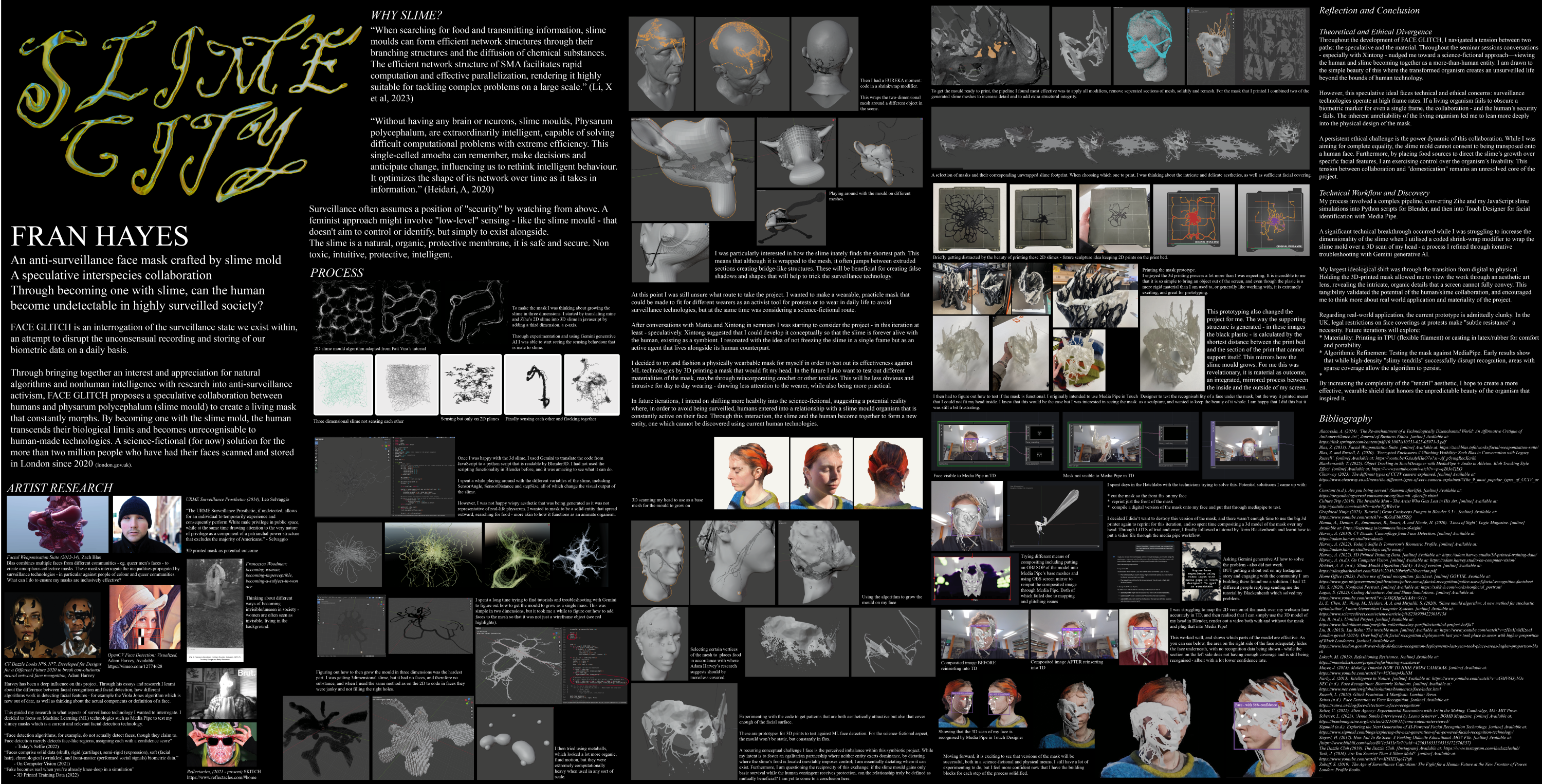
FRAN HAYES
Interactive text code by HEZ @dimmer.rivver
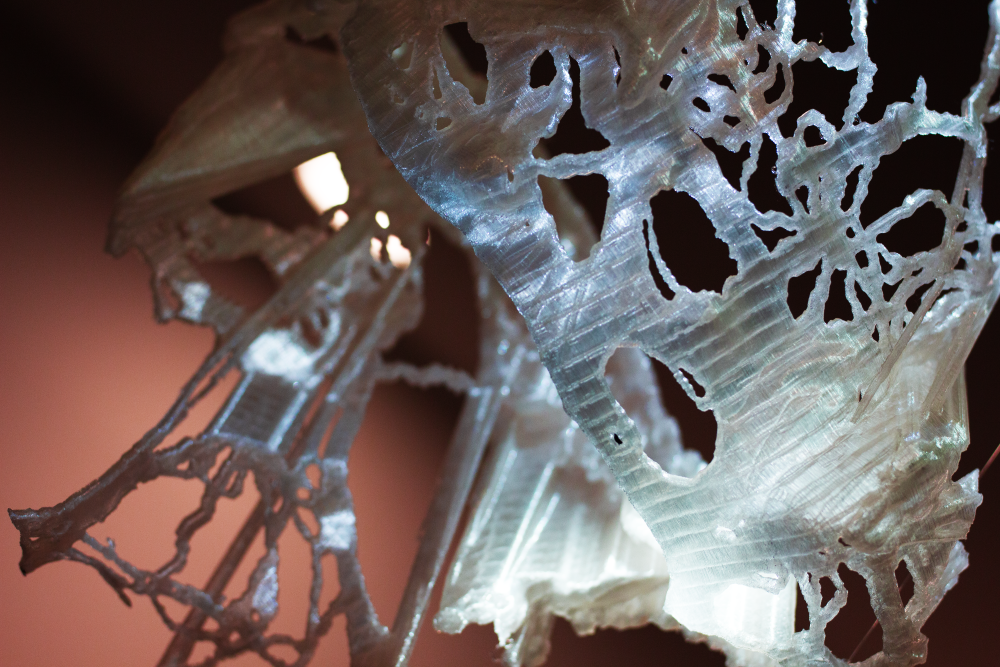
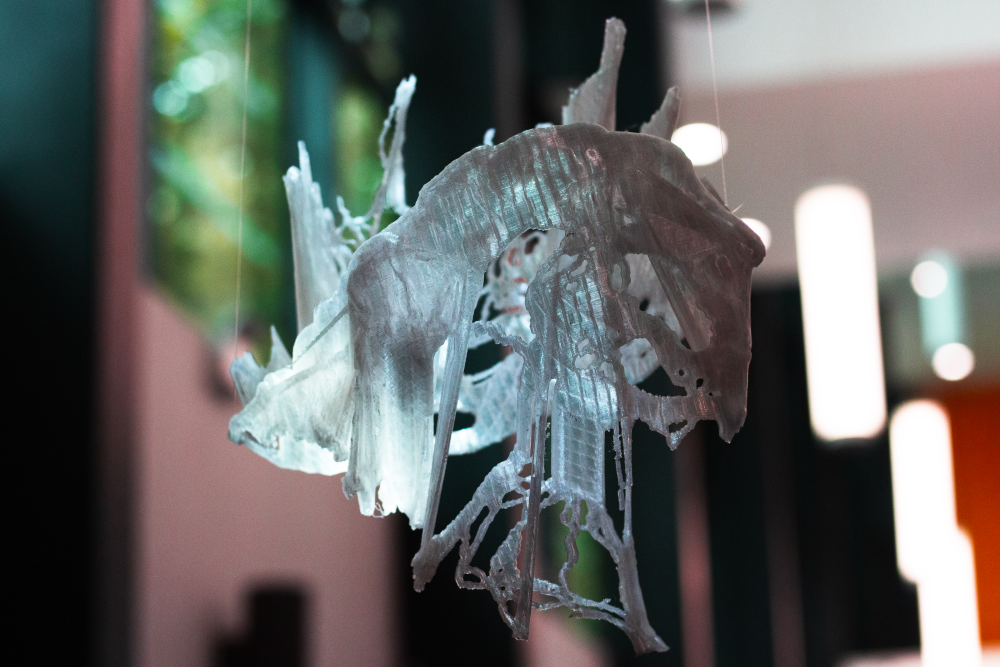
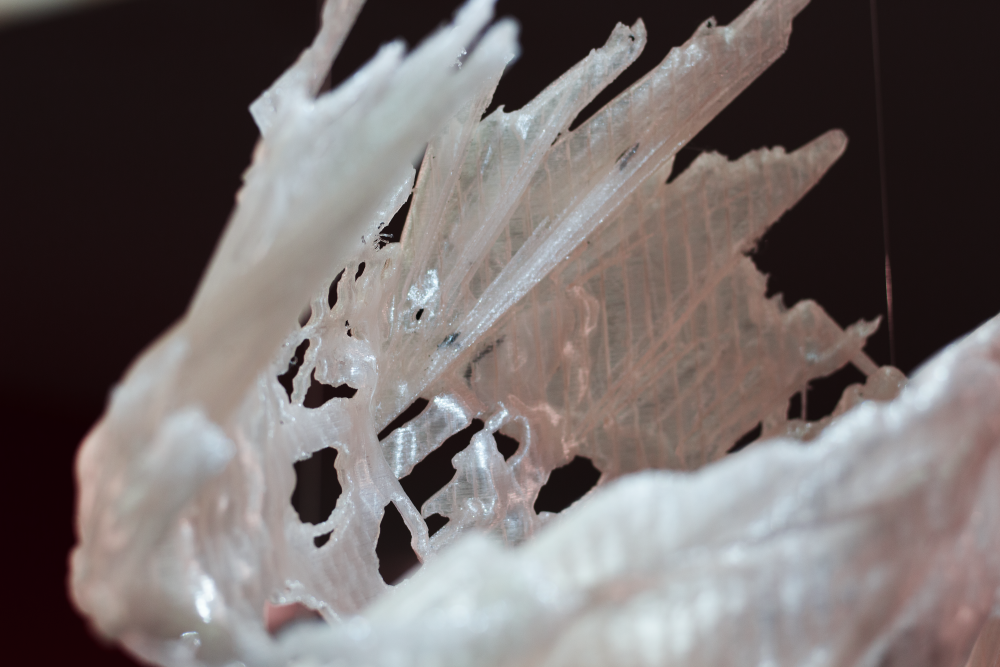
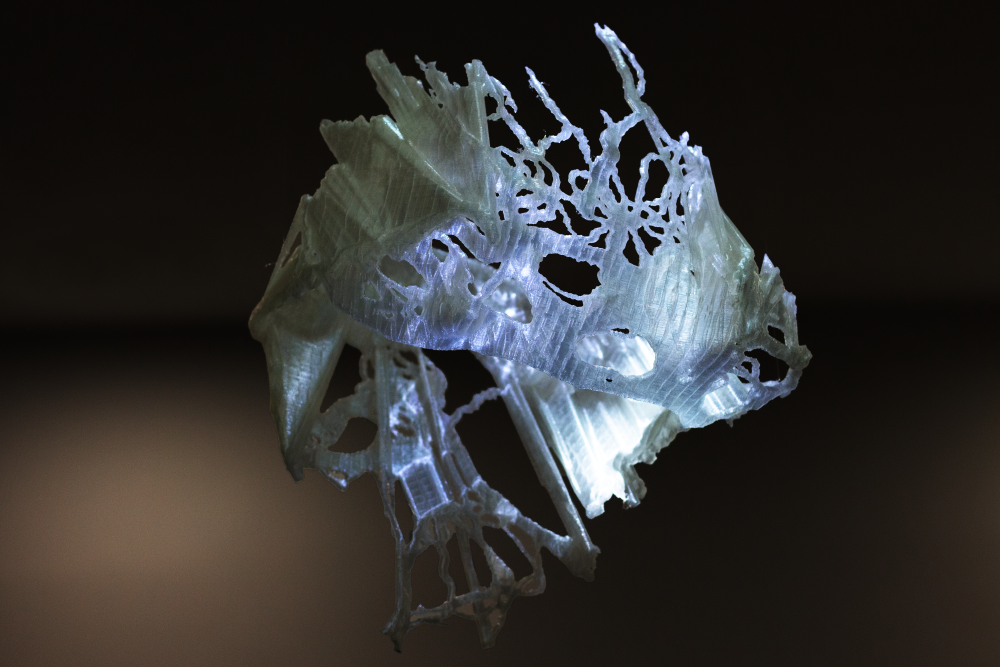
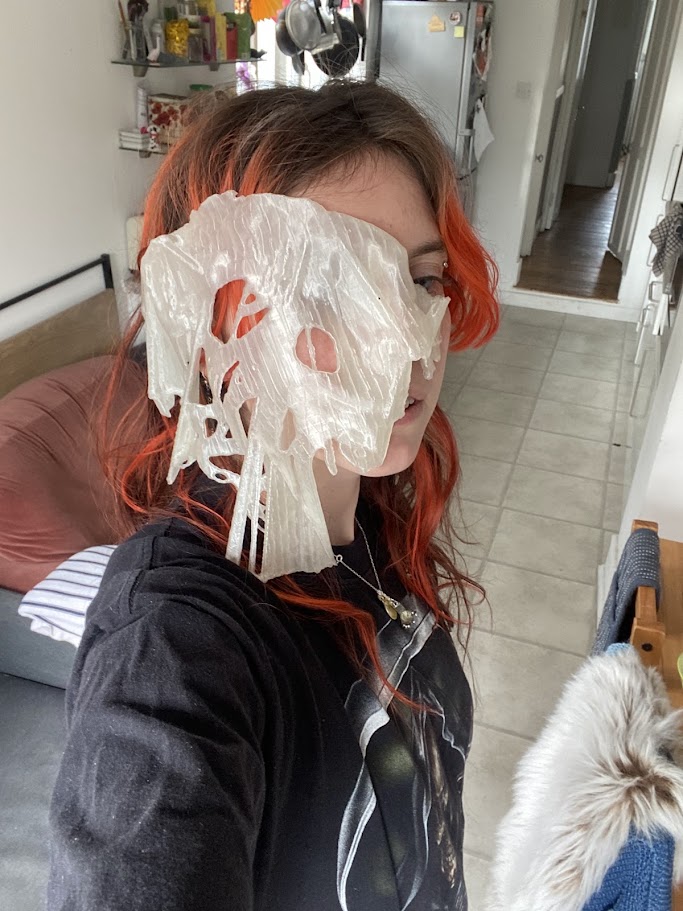
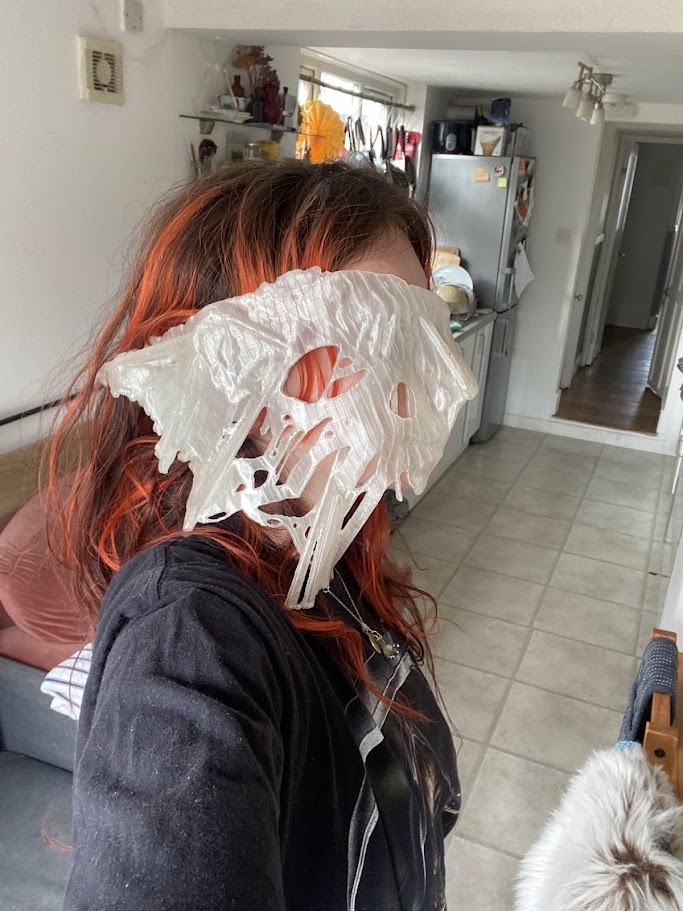
SLIME CITY is an anti-facial recognition project straddling the physical and the
science-fictional.
Current outcomes exist as an anti-surveillance face mask crafted by slime mould; a speculative interspecies
collaboration. Through becoming one with slime, can the human become undetectable in heavily surveilled society?
FACE GLITCH is an interrogation of the surveillance state we exist within, an attempt to disrupt the unconsensual
recording and storing of our biometric data on a daily basis.
Research into artists disrupting facial recognition technologies such as Zach Blas’ Facial Weaponisation Suite
(2012 - 2014) and Adam Harvey’s CV DAZZLE (2013 - 2022) showed
me how underground resistance against surveillance
technologies can come together with art to form both practical and beautiful objects of resistance.
Through bringing together an interest and appreciation for natural algorithms and nonhuman intelligence with
research into anti-surveillance activism, SLIME CITY proposes a speculative collaboration between humans and
physarum polycephalum (slime mould) to create a living mask that constantly morphs. By becoming one with the slime
mold, the human transcends their biological limits and becomes unrecognisable to human-made technologies. A
science-fictional (for now) solution for the more than two million people who have had their faces scanned and
stored in London since 2020 (london.gov.uk).
The project exists in two strands, the first a speculative idea where the human and the slime coexist on a
permanent basis, entering a symbiotic relationship. By transcending their original bodies and becoming entangled,
the slime camouflages the human from surveillance technologies, while the human feeds the slime organism, offering
it life.
The other strand is a physical mask developed through computational means and customisable for each wearer.
Currently this mask only exists as a 3D printed artifact, but in future iterations of material testing I hope to
make it a more flexible wearable item for use at protests or in general daily life.
The project draws inspiration from Gilles Deleuze and Felix Guattari A THOUSAND PLATEAUS, Capitalism and
Schizophrenia, in particular the Rhizomatic introduction, where they reject biomimicry, stating that different
species can become together.
The pair discuss the relationship between a wasp and orchid - the orchid over time having come to visually
resemble the wasp - the relationship allows the orchid to attract the wasp for pollination, and for the wasp to
gain nutrients from the orchid (Deleuze, G. Guattari, F. p.10).
Deleuze and Guittari reject the idea of imitation - where one thing simply copies another - and shift toward the
idea of becoming; where two things merge into a single functioning system.
They explain the deterritorialisation and reterritorialisation of these entities:
Deterritorialisation (leaving): when something breaks away from its normal function or identity. The orchid leaves
being just a flower when it starts looking like a female wasp. It is un-flowering itself.
Reterritorialisation (landing): when that thing finds a new home or function. The wasp lands on the orchid's
image, pulling the orchid into the wasp's world of mating and movement.
“The orchid does not reproduce the tracing of the wasp; it forms a map with the wasp, in a rhizome.” (Deleuze, G.
Guattari, F. p.2)
Through the becoming together of human and slime mold, I suggest a shift toward a multidimensional, collaborative
existence. By entering into multispecies relationships, can we foster a softer, more inclusive future that rejects
the rigid human dominance haunting our planet? Can we disrupt the surveillance state through soft collaborations
with nonhuman entities—embracing a becoming cyborg that remembers how to live harmoniously with other organisms?
Ultimately, speculative symbiosis offers a way to reframe ourselves and our bodies within computational
environments, paving the way for a kinder, shared future.